Personal Loans Explained: How They Work, Real Costs, Interest Rates & Hidden Risks
📘 In This Guide 👇
- Introduction to Loan Concepts
- What Is a Personal Loan?
- How Personal Loans Work (Step by Step)
- Secured vs. Unsecured Personal Loans
- Understanding Interest Rates and APR
- What Determines Your Interest Rate?
- How Much Does a Personal Loan Really Cost?
- When Is a Personal Loan a Good Idea?
- When Taking a Personal Loan Can Increase Financial Risk
- The Hidden Risks Most People Ignore
- How to Qualify for a Better Offer
- Alternatives Before Borrowing
- Frequently Asked Questions
- Final Thoughts: When money is limited, building extra income is essential
Introduction to Loan Concepts
Borrowing money can either relieve financial pressure — or quietly multiply it.
A personal loan is one of the most accessible financial tools in modern banking. It can consolidate debt, cover urgent expenses, or help you navigate a transitional season of life. But without clarity, it can just as easily become a long-term burden.
Understanding how personal loans work is not optional. It is protection.
This guide walks you through the structure, costs, approval factors, and real risks — so you make decisions from knowledge, not urgency.
This guide is based on proven loan systems used by financial counselors, nonprofit credit agencies around the world.
This article reflects structured financial decision frameworks commonly used in credit counseling and debt management planning. It is designed for educational purposes and does not constitute personalized financial advice.
At SmartMoneyTrek, we focus on practical personal finance systems designed for real people — especially those building stability from limited income.
What Is a Personal Loan?
A personal loan is a fixed sum of money borrowed from a bank, credit union, or online lender and repaid in equal monthly installments over a set period — typically between one and five years.
Unlike credit cards (which are revolving credit), personal loans are installment loans. You receive the full amount upfront and repay it steadily until the balance reaches zero.
Most personal loans are unsecured, meaning:
- No collateral is required.
- Approval is based on your financial profile.
Because lenders are not protected by collateral, they rely heavily on your creditworthiness — and price the loan accordingly.
Before taking on any loan, understand whether the debt will strengthen or weaken your finances. Learn the difference between bad debt and good debt to determine where a personal loan truly fits.
Saving money works best when you are tracking every dollar with a clear monthly budget plan .
How Personal Loans Work (Step by Step)
The mechanics are straightforward, but the implications are significant.
1. Application & Underwriting
The process begins when you submit your personal and financial information to the lender. This typically includes details about your income, employment, existing debts, and credit background.
During the underwriting stage, the lender carefully reviews several key factors:
- Credit score – A numerical summary of your creditworthiness and repayment behavior.
- Income and employment stability – Evidence that you earn enough and have consistent income to repay the loan.
- Debt-to-Income (DTI) ratio – The percentage of your monthly income already committed to debt payments.
- Credit history – Your track record with past loans, credit cards, and other financial obligations.
Based on this assessment, the lender determines whether you qualify for the loan and evaluates the level of risk involved. This decision also influences the loan amount you may receive and the interest rate you’ll be offered.
2. Loan Offer
If your application is approved, the lender will present a formal loan offer detailing the specific terms and conditions of the agreement. This offer typically includes:
- Loan amount – The total sum of money you are authorized to borrow.
- Interest rate – The percentage charged on the principal for borrowing the funds.
- Annual Percentage Rate (APR) – The overall yearly cost of the loan, including interest and applicable fees, providing a more comprehensive measure of borrowing cost.
- Repayment term – The length of time you are given to repay the loan in scheduled installments.
- Fees (if any) – Additional charges such as origination fees, late payment penalties, or prepayment fees.
Carefully reviewing these details is essential, as they determine the true cost of the loan and your long-term repayment obligations.
3. Disbursement
Once the loan agreement is finalized and accepted, the approved funds are transferred directly into your designated bank account. In many cases, this deposit is completed within a few business days, though the exact timeline may vary depending on the lender and your bank’s processing procedures.
Prompt funding is one of the primary advantages of personal loans, particularly when addressing urgent financial needs.
4. Repayment
You repay the loan through scheduled monthly installments, each consisting of two primary components:
- Principal – The portion of the payment that reduces the original amount borrowed.
- Interest – The charge imposed by the lender for the use of the funds.
If the loan carries a fixed interest rate, your monthly payment amount remains consistent throughout the repayment period. This stability allows for easier budgeting and predictable financial planning, as your obligation does not fluctuate over time.
5. Completion
After all scheduled payments have been completed, the loan is officially satisfied, and your financial obligation to the lender comes to an end. At this point, the account is closed, and the debt is considered fully repaid.
The framework of a personal loan may appear straightforward, but the responsibility it carries is significant. Entering into a loan agreement requires discipline, long-term commitment, and a clear understanding of the financial impact involved.
If you don’t yet have a simple tracking system, follow our complete beginner budgeting guide for managing your money to see where your money is leaking and how to plug those holes.
Secured vs. Unsecured Personal Loans
Personal loans do not all present the same level of financial risk. The structure of the loan significantly influences both the cost of borrowing and the potential consequences of non-repayment.
Key Structural Differences
| Advantages | Disadvantages |
|---|---|
| Fixed monthly payments | Total interest cost |
| Predictable repayment term | May include fees |
| No collateral required (unsecured) | Can impact credit score |
Unsecured Personal Loans
Unsecured personal loans do not require collateral, meaning you are not pledging assets such as property or a vehicle to secure the debt. Instead, approval is based primarily on your creditworthiness, including your credit score, income stability, and overall credit profile.
Because the lender assumes greater risk without collateral, these loans typically carry higher interest rates compared to secured options. The primary risk to the borrower is not the loss of physical assets, but potential damage to their credit standing. Failure to repay can lead to negative credit reporting, collection actions, and long-term credit score deterioration.
The majority of personal loans available in the market fall under this unsecured category.
Secured Personal Loans
Secured personal loans are supported by collateral—an asset such as a vehicle, savings account, or property pledged to the lender as security for the loan. This collateral reduces the lender’s risk, which often results in lower interest rates compared to unsecured loans.
Because the loan is backed by an asset, approval may also be more accessible for borrowers with weaker credit profiles. The presence of collateral provides the lender with an added layer of protection, making them more willing to extend credit.
However, this structure introduces a significant personal risk. If you fail to meet your repayment obligations, the lender has the legal right to seize the pledged asset to recover the outstanding balance.
The trade-off is straightforward: potentially lower borrowing costs in exchange for placing valuable assets at risk.
In summary: Unsecured loans offer simplicity and no asset risk but often at higher interest rates. Secured loans may reduce borrowing costs but require collateral and introduce the risk of asset loss. The right choice depends on your credit strength and risk tolerance.
Understanding Interest Rates and APR
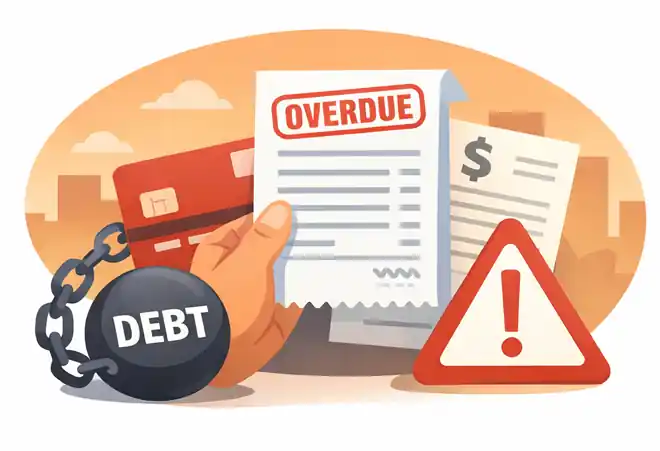
Interest represents the cost of borrowing money from a lender. It is the compensation paid for the temporary use of funds.
For example, if you borrow $10,000 at a 15% interest rate, you will not simply repay the original $10,000. Instead, you repay the principal plus the accumulated interest over the agreed repayment period. The total amount repaid depends on the rate, term, and structure of the loan.
Where many borrowers miscalculate the true expense is in understanding the difference between the interest rate and the Annual Percentage Rate (APR). Understanding this difference helps you avoid long-term debt traps and borrow strategically within your financial limits.
- Interest Rate – This reflects the base percentage charged on the principal amount borrowed.
- APR (Annual Percentage Rate) – This includes the interest rate plus certain mandatory fees, such as origination or processing charges.
Because APR incorporates both interest and required fees, it provides a more accurate representation of the loan’s total yearly cost. When comparing loan offers, evaluating the APR rather than focusing solely on the advertised interest rate gives a clearer and more reliable basis for decision-making.
High monthly bills often lead to debt. If that’s your situation, visit our how to reduce debt and stop high interest payments eating your income.
What Are Typical Personal Loan Interest Rates?
Personal loan interest rates vary widely depending on credit profile, income stability, lender type, and overall market conditions. While exact numbers fluctuate, most lenders price unsecured personal loans within a broad range.
- Excellent credit – Generally offered the lowest available rates
- Good credit – Competitive but slightly higher pricing
- Fair credit – Moderate to high interest costs
- Poor credit – Significantly higher rates due to increased lending risk
Rather than focusing on advertised “starting rates,” compare the APR you personally qualify for. That figure reflects your actual borrowing cost.
Rates also shift based on broader economic factors, including central bank policy and inflation trends. This is why two borrowers applying months apart may receive different offers—even with similar credit profiles.
What Determines Your Interest Rate?
Your interest rate is not assigned arbitrarily; it is determined through a structured risk assessment process. Lenders evaluate how likely you are to repay the loan, and the level of perceived risk directly influences the rate you are offered.
1. Credit Score
Your credit score plays a central role in this evaluation. It serves as a numerical indicator of your borrowing history and repayment reliability.
Before applying for a loan, take time to review your credit report and address any errors. A stronger credit profile can significantly reduce your borrowing costs.
- Higher credit score → Lower perceived risk → More favorable (lower) interest rate
- Lower credit score → Higher perceived risk → Less favorable (higher) interest rate
Among all underwriting factors, your credit score is typically the most influential in determining both approval and pricing. Even a modest improvement in your score can significantly reduce the total cost of borrowing over time.
To better understand how borrowing activity influences your credit profile, you can review educational resources from Experian’s credit score guide , which explains the key factors that determine how scores are calculated and updated.
2. Income Stability
Stable and verifiable income provides lenders with confidence in your ability to meet repayment obligations. When you can demonstrate consistent earnings—supported by documentation such as pay slips, tax returns, or bank statements—it signals financial reliability and reduces the lender’s perceived risk.
The more predictable and sufficient your income appears relative to the loan amount, the stronger your application becomes.
3. Debt-to-Income Ratio (DTI)
If a significant percentage of your income is already committed to existing debt obligations, lenders may view you as financially overextended. This higher debt burden increases the perceived risk that you could struggle to manage additional payments.
As a result, the lender may respond by offering a higher interest rate to offset the risk—or, in some cases, decline the application altogether.
4. Loan Term
Loan duration plays a crucial role in determining both your monthly payment and the overall cost of borrowing.
A shorter repayment term typically results in higher monthly installments, as the principal is repaid over a compressed period. However, because interest accrues for a shorter time, the total interest paid over the life of the loan is usually lower.
Conversely, a longer repayment term spreads payments out over more time, reducing the monthly financial burden. The trade-off, however, is that interest accumulates for a longer period, increasing the total amount repaid overall.
Choosing the right term requires balancing affordability today with long-term cost efficiency.
5. Economic Environment
Wider economic conditions play a significant role in shaping lending rates across the financial system. Interest rates do not exist in isolation; they are influenced by monetary policy, inflation trends, and overall market stability.
When central banks raise benchmark interest rates, the cost of borrowing increases throughout the economy. Commercial banks and financial institutions typically adjust their lending rates upward in response, making loans more expensive for consumers and businesses alike.
How Much Does a Personal Loan Really Cost?
Consider a practical illustration:
- Loan amount: $10,000
- APR: 15%
- Repayment term: 3 years
Under these terms, your estimated monthly payment would be approximately $347. Over three years, you would repay around $12,492 in total. That means about $2,492 represents interest — the true cost of borrowing.
Most borrowers focus on the monthly payment and ignore total repayment. This behavioral tendency—known as payment anchoring—causes borrowers to underestimate long-term interest costs while overvaluing short-term affordability. Always calculate full repayment before committing.
This example highlights a critical principle: the combination of interest rate and loan duration determines the true cost of financing. A lower rate reduces the overall interest charged, while a shorter term limits the time interest can accumulate. So, the lower the rate and shorter the term, the less expensive the loan becomes.
Grasping this relationship between rate, term, and total repayment empowers you to make more strategic borrowing decisions rather than focusing solely on the monthly payment.
If you're unsure whether a loan payment fits comfortably within your income, start by creating a clear plan using our guide on Mastering Your Money: How to Create a Monthly Budget That Actually Works.
Pros and Cons of Personal Loans
Advantages
- Fixed monthly payments for predictable budgeting
- Clear repayment timeline
- Often lower interest rates than credit cards (for qualified borrowers)
- Can consolidate multiple debts into one payment
Disadvantages
- Total interest paid over time can be significant
- May include origination or administrative fees
- Missed payments damage credit score
- Longer terms increase overall borrowing cost
A personal loan becomes beneficial only when the advantages outweigh the total long-term cost.
When Is a Personal Loan a Good Idea?
A personal loan can be a prudent financial decision when it strengthens your overall financial position rather than weakening it.
When used strategically—such as consolidating high-interest debt, financing an essential expense, or investing in an opportunity that increases income—a loan can serve as a tool for financial improvement. The key is ensuring that the long-term benefits outweigh the cost of borrowing.
Debt Consolidation
Using a personal loan to pay off high-interest credit card balances can lower your overall borrowing costs if the loan carries a more favorable rate. By consolidating multiple card balances into a single installment loan, you may reduce the amount of interest paid over time while also streamlining your finances into one predictable monthly payment.
This approach can improve cash flow and provide a clearer repayment structure—provided the loan terms are more advantageous than the credit card rates being replaced.
If you’re consolidating existing balances, follow our proven framework on how to pay off debt faster without sacrificing your lifestyle to ensure you reduce total interest instead of extending repayment.
Emergency Expenses
Unexpected medical expenses or urgent property repairs are situations where postponement may not be feasible. In such cases, a personal loan can provide immediate access to funds, allowing you to address critical needs without delay.
When used for essential and time-sensitive obligations, borrowing can serve as a practical solution—especially if alternative resources are unavailable.
Necessary Major Costs
Necessary expenses that protect your financial stability—such as housing, healthcare, or critical repairs—can justify the use of a personal loan when other options are limited.
In such circumstances, the loan functions as a temporary financial bridge, helping you maintain continuity and avoid greater disruption. It is a tool for stability and problem-solving, not a means of upgrading lifestyle or funding discretionary spending.
Personal Loan vs Credit Card vs Payday Loan
Not all borrowing options function the same way. Understanding structural differences helps you choose wisely.
| Feature | Personal Loan | Credit Card | Payday Loan |
|---|---|---|---|
| Structure | Fixed installment | Revolving credit | Short-term lump sum |
| Interest Range | Moderate to high | High | Extremely high |
| Best For | Planned large expense | Flexible short-term use | Emergency only (last resort) |
| Repayment | Fixed timeline | Minimum monthly required | Due quickly (often within weeks) |
While personal loans can be strategic tools, payday loans often carry extremely high costs and short repayment windows that increase default risk.
When Taking a Personal Loan Can Increase Financial Risk
Financial challenges often emerge when borrowing decisions are driven by impulse rather than careful planning. When a personal loan is used to fund discretionary or non-essential expenses—such as vacations, luxury items, image-driven purchases, or ongoing overspending—it can create obligations without generating lasting financial value.
Unlike strategic borrowing, which aims to improve stability or reduce costs, emotionally motivated borrowing may extend financial strain and limit future flexibility.
If a loan does not clearly contribute to strengthening your long-term financial position, it is wise to pause and reassess before proceeding.
Often, the real solution is not more borrowing but increasing income or reducing expenses. Explore best side hustles to make extra money to strengthen your financial position before committing to new debt.
The Hidden Risks Most People Ignore
Approval may bring immediate relief, but repayment carries a lasting responsibility.
1. Total Repayment Cost
Even seemingly moderate interest rates can result in a significant total cost over the life of a loan. As interest accumulates over time, the amount repaid can be considerably higher than the original sum borrowed.
2. Fees
Additional charges can materially raise the true cost of borrowing. Common examples include:
- Origination fees (typically 1%–8%) – A percentage deducted upfront for processing the loan.
- Late payment penalties – Fees applied if scheduled payments are missed or delayed.
- Prepayment penalties – Charges imposed for paying off the loan earlier than agreed.
Although these costs may appear secondary, they can substantially increase your effective borrowing expense beyond the stated interest rate.
3. Credit Impact
Submitting a loan application typically results in a hard inquiry on your credit report, which may cause a temporary and modest decline in your credit score.
More serious consequences arise if payments are missed. Delinquent payments can significantly damage your credit profile and remain visible to future lenders. In cases of default, the negative record may stay on your credit report for several years, affecting your ability to secure credit on favorable terms in the future.
4. The Debt Cycle
When borrowers repeatedly take new loans to repay old ones, they enter what financial counselors call a rolling debt cycle. Instead of reducing total obligation, the debt is transferred — often with new fees and extended interest timelines.
Healthy debt management requires forward movement. Your total balance should steadily decline, not circulate from one account to the next. Real progress happens when each payment brings you closer to financial freedom—not when it simply resets the clock.
How to Qualify for a Better Offer
If you’re considering applying for a loan, it’s wise to position yourself strategically before submitting any application. Thoughtful preparation can significantly improve your approval chances and secure more favorable terms.
Start by strengthening your credit profile. A higher credit score often translates into lower interest rates and better repayment conditions. Next, work on reducing your existing debt. Lenders assess your debt-to-income ratio, and lowering outstanding balances signals financial stability and responsible money management.
Be careful not to submit multiple loan applications at the same time. Frequent credit inquiries within a short period can temporarily lower your score and raise concerns for lenders. Instead, research and compare several lenders first—evaluate their interest rates, repayment terms, and overall loan structure before formally applying.
Finally, examine all fee disclosures thoroughly. Pay close attention to origination fees, late penalties, prepayment charges, and any hidden costs that could increase the total cost of borrowing.
Careful preparation is not just a formality—it can save you thousands over the life of a loan and protect you from costly financial missteps.
Alternatives Before Borrowing
Before committing to any financial agreement, take a moment to step back and assess your alternatives carefully. A brief pause can prevent long-term financial strain.
First, review your emergency savings. If you have funds set aside, they may help address the situation without adding new debt. Next, consider whether you can negotiate a payment plan with the creditor. Many lenders or service providers are open to structured arrangements that ease immediate pressure without requiring additional borrowing.
You might also explore temporary ways to increase your income—such as short-term freelance work, overtime, or selling unused assets—to bridge the gap. At the same time, identify practical expense reductions. Even modest cuts in discretionary spending can create breathing room when managed intentionally.
Not every financial challenge requires immediate borrowing. In many cases, thoughtful restraint and strategic adjustments are the most powerful—and cost-effective—decisions you can make.
If your income is tight, these practical ways to save money on a low income can help free up cash without relying on loans.
To better understand how borrowing activity influences your credit profile, you can review educational resources from Experian’s official credit score guide , which explains the key factors that determine how scores are calculated and updated.
The SmartMoneyTrek Personal Loan Decision Framework
Before accepting any personal loan, evaluate it through this three-layer decision filter. If the loan fails two or more tests below, it is likely a financial liability — not a solution.
Layer 1: Purpose Test
- Does this loan solve a structural financial problem (high-interest debt, emergency repair, medical need)?
- Or is it funding consumption (lifestyle upgrades, vacations, impulse purchases)?
If the loan does not strengthen your financial position, reconsider.
Layer 2: Affordability Test
- Will the monthly payment remain below 25% of your disposable income?
- Can you repay it without relying on future borrowing?
If repayment depends on "hoping income improves," risk increases significantly.
Layer 3: Cost Efficiency Test
- Is the APR lower than the debt it is replacing?
- Is total interest under 30–40% of the principal over the life of the loan?
A loan that reduces total interest burden may improve your position. One that increases long-term cost only delays financial pressure.
If a loan passes all three layers, it may be strategic. If it fails two or more, it is likely expensive stress disguised as relief.
Learn More on SmartMoneyTrek
Explore our core financial guides:
- Save Money – proven ways to cut bills and build savings
- Budgeting – Tools and strategies to control your money
- Make Money – real side hustles and income ideas
- Loans & Debt – How to borrow wisely and eliminate debt
Frequently Asked Questions About Personal Loans
A personal loan is a fixed amount of money borrowed from a lender and repaid in equal monthly installments over a set period. Most personal loans are unsecured, meaning they do not require collateral. You receive the full amount upfront and repay both the principal and interest until the balance reaches zero.
While requirements vary by lender, a credit score of 670 or higher typically qualifies for better interest rates. Borrowers with lower scores may still be approved but often at higher rates due to increased lending risk.
The interest rate reflects the percentage charged on the borrowed amount. APR (Annual Percentage Rate) includes the interest rate plus certain mandatory fees, giving a more accurate picture of the total yearly cost of the loan.
Personal loans may be better for large, fixed expenses because they offer structured repayment and often lower interest rates than credit cards. However, the right choice depends on your financial situation, repayment discipline, and borrowing cost.
Many lenders allow early repayment, but some charge prepayment penalties. Always review the loan agreement to confirm whether additional fees apply before paying off the balance early.
Approval can range from a few hours to several business days, depending on the lender and your financial profile. Online lenders often provide faster processing compared to traditional banks.
Yes. A formal loan application usually results in a hard inquiry on your credit report, which may temporarily lower your score slightly. Consistent on-time payments afterward can help strengthen your credit profile over time.
Compare Trusted Personal Loan Providers
Before applying, compare APR, fees, and repayment terms carefully. Many lenders allow you to check rates without affecting your credit score.
Final Reflection: A personal loan is a financial tool
A personal loan is not inherently beneficial or harmful—it is a financial tool. Like any form of leverage, its impact depends entirely on how it is used.
When approached with discipline and a clear plan, a personal loan can restore order to disorganized finances, consolidate multiple obligations into one structured payment, and provide temporary relief during a transition. Used strategically, it can create stability and breathing room. However, when taken impulsively or without a repayment strategy, it can intensify financial pressure, increase long-term costs, and restrict future flexibility.
Before committing, pause and evaluate your position carefully:
- Do I genuinely need this loan, or am I reacting to short-term pressure?
- Can I repay it comfortably within my current income structure?
- Will this decision move my finances forward—or simply postpone a deeper issue?
Sound judgment is your first layer of protection. Clear understanding of the terms is your second. Financial discipline is your strongest safeguard.
Before applying, review your monthly budget and calculate whether the payment fits comfortably within your income.
If you're just getting started with managing your money, read best budgeting method for beginners to build a simple structure before taking on new financial obligations.
This content is for educational purposes only and does not constitute financial advice.